

NCPG Announces Webinars on Problem Gambling and Responsible Gaming
The National Council on Problem Gambling (NCPG) announced a series of webinars focusing on prediction markets, gambling-related harm in Native American communities, and responsible gaming awareness. The sessions aim to provide information on prevention, treatment, and research related to problem gambling.
The first webinar, “Prediction Markets as an Emerging Public Health Issue,” was scheduled for October 20, 2026. The discussion focused on the rapid growth of prediction markets and the potential public health concerns associated with their increasing popularity. The session was designed to build on a recent Science Policy Forum examining the expansion of commercial prediction markets.
On October 27, NCPG will host “Understanding Gambling-Related Harm and Commercial Tobacco Use in Native Communities.” The webinar will examine new research on the relationship between gambling, commercial tobacco use, and casino environments in American Indian communities. It will also discuss how cultural practices and community involvement can support prevention, treatment, and recovery.
The final webinar, “Gift Responsibly 2026 Campaign Overview and Q&A,” is scheduled for November 17. The session will introduce the updated 2026 campaign toolkit and discuss efforts to raise awareness about youth gambling, particularly the risks associated with giving lottery tickets to children.
All remaining webinars are scheduled for 1:00 p.m. ET. The October 27 session is free for NCPG members and $59 for non-members, while the November 17 webinar is free to the public with registration required.
Registration and additional information: https://www.ncpgambling.org/events/
NCAA Presidents Charlie Baker to Speak at NCLGS Winter Meeting
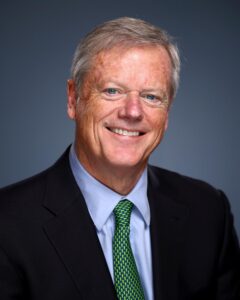
The National Council of Legislators from Gaming States (NCLGS) announced that NCAA President Charlie Baker will participate in a one-on-one discussion at its upcoming Winter Meeting, scheduled for December 9–12, 2026, at the JW Marriott Savannah Plant Riverside District in Savannah, Georgia.
The discussion will be moderated by Massachusetts Representative Michael Finn, NCLGS Vice President, and will focus on the future of college athletics, the growth of legalized sports betting, and the challenges of protecting student-athletes and maintaining the integrity of college sports.
Baker, who previously served as Governor of Massachusetts, has served as NCAA President since 2023. He has emphasized the importance of cooperation between state and federal policymakers as college athletics continues to face changes involving sports wagering, regulations, and student-athlete protections.
The Winter Meeting will also feature legislative discussions, gaming regulatory panels, responsible gaming topics, and opportunities for attendees to meet with policymakers and industry leaders.
Hotel reservations must be made before November 7 to secure the NCLGS group rate.
Registration and additional information: https://nclgs.regfox.com/nclgs-winter-meeting-2026-savannah
Michigan iGaming and Online Sports Betting Revenue Reaches $355.7 Million in September
Michigan commercial and tribal gaming operators reported a combined $355.7 million in internet gaming (iGaming) and online sports betting gross receipts for September 2026, according to the Michigan Gaming Control Board (MGCB). The total represents a 5.4% increase from August, with iGaming generating $300.2 million and online sports betting accounting for $55.5 million.
Combined adjusted gross receipts (AGR) totaled $313.04 million, including $288.15 million from iGaming and $24.89 million from online sports betting. Compared to August, iGaming AGR declined 0.9%, while online sports betting AGR increased 2.9%. Year-over-year, iGaming AGR increased 18.4%, while online sports betting AGR rose 88.2%.
Online sports betting handle reached $544.8 million in September, a 64.9% increase from August. Operators submitted $62.4 million in taxes and payments to the State of Michigan, including $60.6 million from iGaming and $1.8 million from online sports betting.
Detroit’s three commercial casinos reported $14.0 million in wagering taxes and municipal services fees paid to the City of Detroit, while tribal operators reported an additional $8.3 million in payments to governing bodies.
As of September 2026, Michigan had 15 authorized commercial and tribal operators offering iGaming and/or online sports betting. All 15 offered iGaming, while 13 offered online sports betting.